
Metropolis
This project explores user research in the healthcare industry. It aims to understand user needs, industry trends, and expectations for healthcare services and apps, with insights gathered through stakeholder interviews.

Process
Research Methodology and Analysis
Type of Research: Employed a Qualitative research methodology.
Method: Conducted Semi-Structured Interviews with a small sample size (N=2 for each group).
Sampling: Used Purposive Sampling for internal stakeholders (to target specific roles) and Convenience Sampling for external stakeholders (patients).
Key Finding: Despite the app's existence, none of the interviewed stakeholders were fully aware of the Metropolis mobile application.
Stakeholder Mapping and Alignment
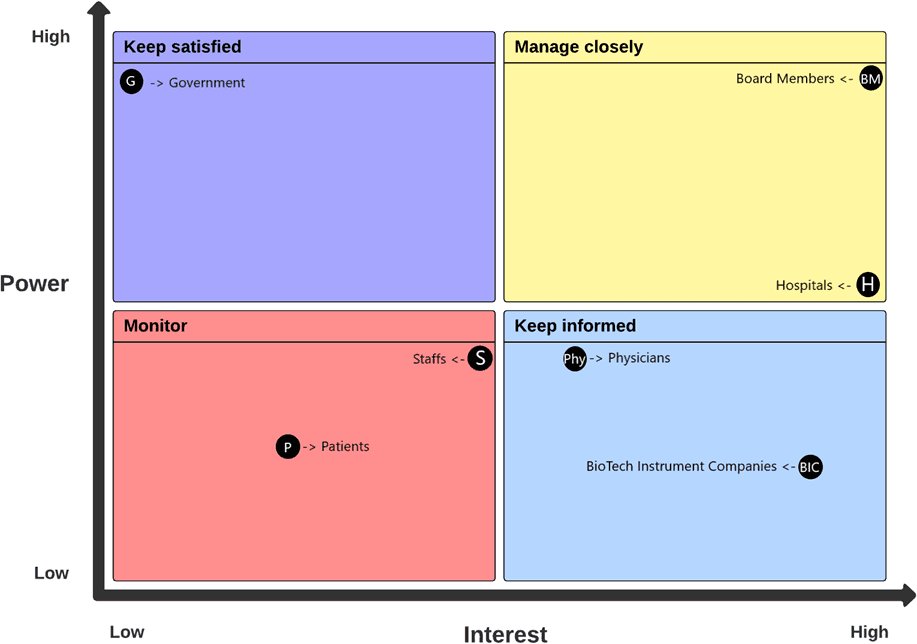
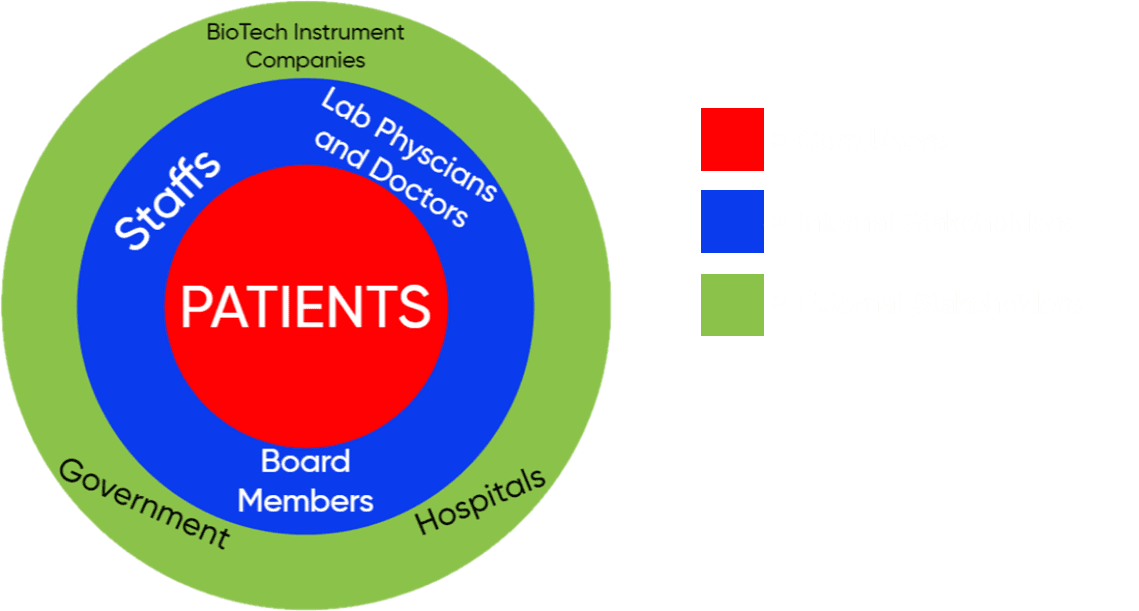
Stakeholders Identified: Mapped three groups: Patients (Core Users), Internal (Staff, Physicians, Board Members), and External (Hospitals, Government, BioTech Instrument Companies).
Power/Interest Grid: Mapped the groups based on their influence and concern:
Manage Closely: Board Members and Hospitals.
Keep Satisfied: Government.
Monitor: Patients (Low Power, Low Interest). This placement is critical for identifying potential disengagement. & Analysis: We conducted user interviews, surveys, and analyzed in-app analytics to understand the pain points and user needs. We also studied competitor apps and industry trends to gather insights
Stakeholder Interviews (Internal and External)
Critical App Awareness Gap: The most significant finding was the pervasive low awareness of the existing mobile application among both internal staff and external patients, confirming a major marketing and communication failure.
High-Value Feature Demand: External patients (users) strongly requested the ability to book at-home sample collection appointments, identifying a key convenience feature the app is missing.
Internal Operational Friction: Internal staff (Lab Technicians) highlighted critical issues with the quality of the database software, indicating a need for internal technology investment to support efficiency.
Strategic Mandate: The overall strategy must shift from purely app development to marketing, accessibility, and internal training to drive adoption and leverage the company's already good local reputation.
User Personas and Empathy Mapping
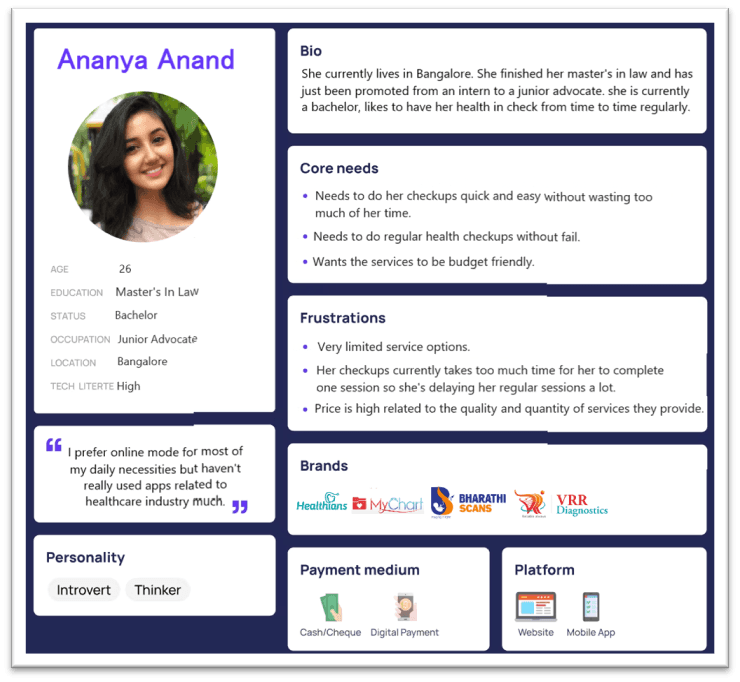
Personas: Created two personas, including Ananya Anand (time-constrained, seeking quick checkups).
Frustrations (Ananya): High prices relative to quality, and checkups taking too much time.
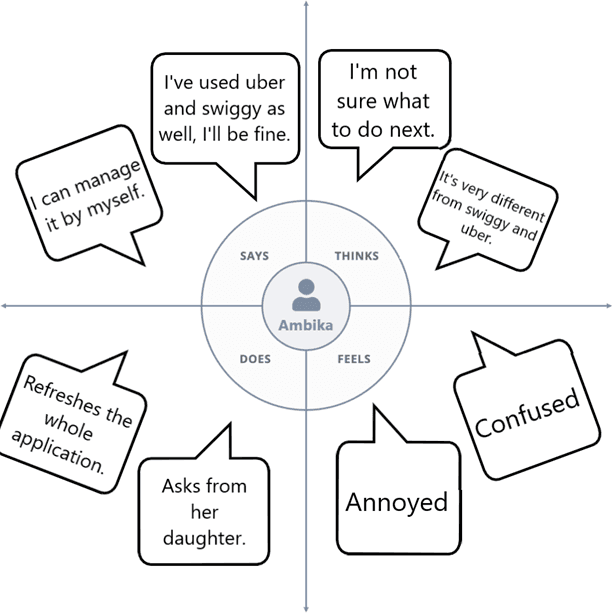
Empathy Map (Ambika Patel): Visually captured the friction points where the user "Feels Confused" and "Annoyed" and "Thinks 'I'm not sure what to do next'" when attempting to use the service.
Conclusion
Achievement: Successfully conducted a multi-faceted research project that provided concrete evidence of both organizational friction (database issues, lack of staff app awareness) and user friction (usability issues, lack of key convenience features).
Key Learning (The Takeaway): The most critical finding was the low awareness of the existing mobile application among both internal and external stakeholders. This validated that investment must shift from solely app development to marketing, accessibility, and internal training/communication to drive adoption.
Actionable Next Steps: Immediately prioritize the app improvements suggested (live chat, icon fix, booking flow simplification) and implement the patient-suggested at-home sample collection booking feature.